
The Brain Predicts Trauma: A Review of Predictive Trauma Theory
The Body Doesn’t Keep The Score; The Brain Keeps Predicting It.
A recently published theoretical paper by Kotler et al. (2026) in Frontiers, an open-access, peer-reviewed journal, has received a lot of attention, particularly from social media influencers. From what I’ve read, many of the summaries are biased and inaccurate.
In plain English, rather than academic jargon, I’ll summarize the paper below, the research reviewed, and my thoughts on its limitations.
The “body keeps the score” is a popular metaphor that the body stores traumatic memory, and in his book of the same name, van der Kolk (2014) uses it to explain why people with trauma can’t just talk through their memories to heal.
Kotler et al. (2026) suggest an updated model: the brain predicts trauma, and the body repeats it in a cyclical loop.
Kotler et al.'s (2026) paper isn’t challenging or taking on van der Kolk’s (2014) work in “The Body Keeps the Score"; instead, the authors state their theory is a reframe or update.
Summary of Research
Kotler et al. (2026) reviewed the following studies to support their theory that trauma-related bodily symptoms are best understood as a problem with how the brain predicts and responds, not as old memories trapped in the body’s tissues.
Empirical studies and computational models, such as Hellyer et al.'s (2015) research, as well as brain scans, show that trauma can shift the brain's connections into defensive patterns, making it harder for the brain to adapt and change (Shinn et al., 2006; Engdahl et al., 2010).
Longitudinal studies on resiliency show that most people who experience a traumatic event don’t develop PTSD, which could be because the brain rebalances and becomes flexible again (Bonanno, 2004).
People continue to have the same experiences because their brains cannot reinterpret them, and the body is part of the ongoing feedback loops and sensory expression of trauma, which the authors call circular feedback loops.

Circular Feedback Loops
We continue to repeat traumatic experiences and sensations because the brain overemphasizes fearful predictions of trauma, then focuses on sensory symptoms like elevated heart rate, a smell, or muscular tension as confirmation that danger exists, reinforcing fearful predictions, and so on; the cycle repeats (Kotler et al., 2026).
Clinical Implications
The storage model of trauma holds that we must release buried memories. The predictive model suggests we should retrain the brain’s predictions to make them more flexible, so that people can update their interpretations of sensory signals.
The researchers suggest practices such as movement, EMDR, mindfulness, memory training, exercise, and sensorimotor feedback can help by providing the nervous system with new experiences of arousal and safety. The traumatized person learns: “My body can be activated, but I am not in danger.”
Flow States
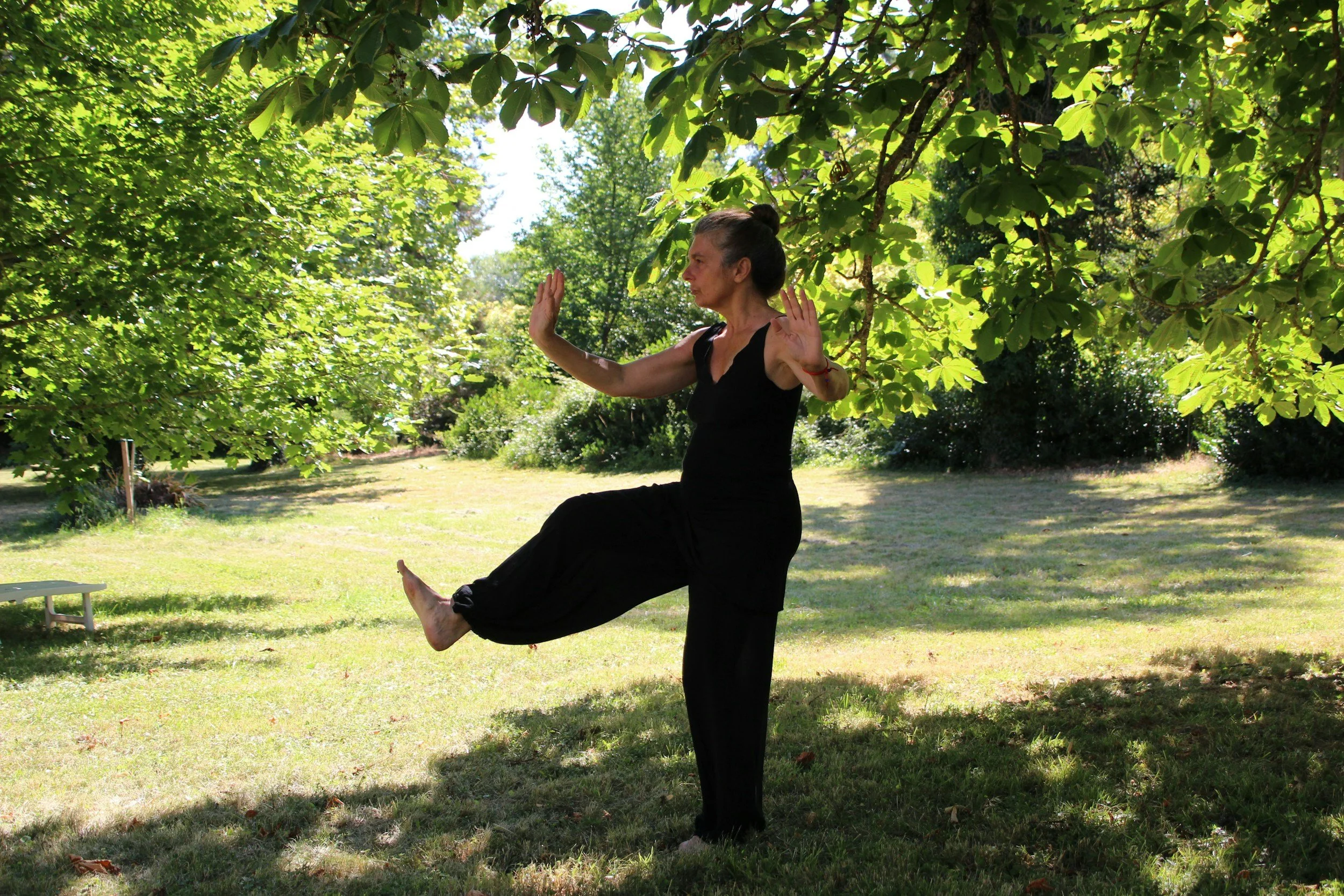
The researchers emphasize that practices like flow states, which provide complete absorption in a meaningful, high-challenge activity, may produce the network dynamics that PTSD disrupts. In a flow state, each time someone experiences deep focus, their brain learns that feeling alert and safe can happen together, which, over time, helps the brain become more flexible.
Critque
Here are my thoughts on the limitations of predictive theory:
The predictive theory of trauma is based on a computer metaphor, called a computational model, that uses terms such as “prediction error” and “free energy.” Computational models are overly simplistic and neglect the role of relational, social, and political variables.
Replacing one metaphor, “The Body Keeps the Score,” with another metaphor,
“The brain makes prediction errors’ isn’t an update. Instead, we need to use both top-down and bottom-up treatments, which are necessary for healing trauma.Predictive theories also overemphasize the brain, without considering how the body plays a participating role in trauma, for instance, by changing breathing patterns, digestion, sexual response, sleep, immune function, and more.
Healing likely occurs by increasing flexible brain-body dynamics rather than by focusing solely on the brain or the body.
Flow states that incorporate our senses may help interoception, the perception of our internal state, aid flexibility, and shift states between the brain and body.
There’s no reason for therapists to abandon the treatments they know work; clients need to access and experience variety for healing.